



The best police procedural mysteries with twists begin before the detective arrives. The moment something terrible happens, people begin making sense of it.
The crowd makes its own story
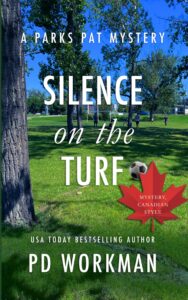
In Silence on the Turf, a youth-sports setting gives the case a ready-made community. Parents, coaches, players, and spectators all have relationships, loyalties, and points of view. They may know one another well. Everyone has an opinion and are happy to share it far and wide. They know what happened. Or they think they do.
That is rich ground for a police procedural. Margie is not working with one simple account. She is sorting through fragments: people who saw only one moment, people protecting a friend, people embarrassed by what they missed, and people who are very sure they know the answer.
The pressure is not only to solve the case. It is to resist solving it too quickly.
Twists should come from what the detective did not know yet

Readers who enjoy police procedural mysteries with twists do not want a random surprise dropped into the final chapter. The best twist changes how you see the evidence that was already there.
A detective may learn that a witness had a reason to leave something out. A timeline may look different after one fact is checked. The person everyone suspected may have been hiding something important, but not the thing the community assumed.
Margie looks, listens, and tests the facts. The answer may surprise her, but it should never feel as though it came from a different book.
Public scrutiny can make the noise louder

Rumour is not limited to packed sidelines. It can grow whenever a case draws strong feelings and public attention.
In Bones of the Elbow, the discovery of human remains in Griffith Woods brings more than one idea about what the case means and what should happen next. Margie has to work carefully with evidence and with people who may be speaking from fear, history, grief, or a desire to protect the land.
The detective’s job is not to win an argument. It is to investigate the evidence. That can be frustrating for people who want a fast answer. It is also the only way to reach an answer that will hold.
Why we love watching the facts win

There is a quiet satisfaction in watching a detective work. Margie does not need the loudest theory. She needs a timeline that makes sense, evidence that can be checked, and questions that lead somewhere. Every time she asks someone to go back to the beginning, she gives the reader a chance to look again too.
That is the promise of a police procedural mystery: the truth may be hidden, but it is not unreachable. The detective will keep working until the facts say more than the rumours.
You can begin reading the series with Out with the Sunset, or step into the pressure of Silence on the Turf or Bones of the Elbow. You can find more Parks Pat reading ideas in the Police Procedural Mysteries hub.
Frequently asked questions
What is the difference between rumour and evidence in a police procedural?
Rumour can point a detective toward a useful lead, but evidence is what can be checked: witness accounts, timing, records, and physical facts that support a conclusion.
What makes a twist fair in a police procedural mystery?
A fair twist changes how readers see information already in the story. The detective earns the new direction by asking better questions and checking what does not fit.