


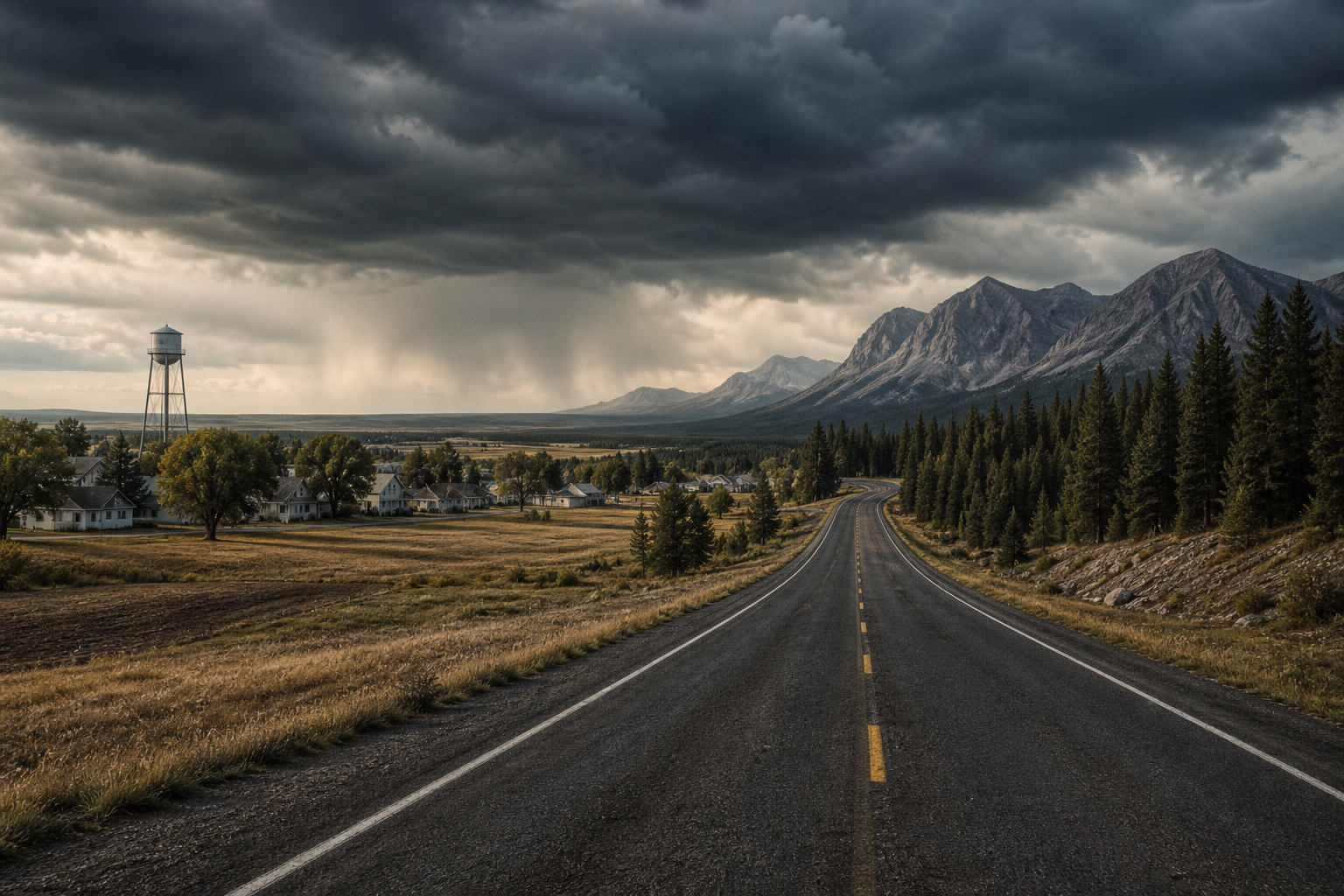
Mysteries of the Midwest and Mountain West: Small Towns, Wild Places, and Dark Secrets
Small towns, wild places, flawed investigators, and secrets shaped by the land.
Some mysteries depend on crowded streets and anonymous suspects. Others need room to breathe.
Across the Midwest and Mountain West, crime fiction uses distance, weather, wilderness, and close-knit communities to create a distinctive kind of tension. A person may be miles from help, yet unable to escape neighbours who know every detail of the local history. A beautiful landscape can offer refuge—or conceal what happened there.
These series and novels travel from a carefully maintained Midwestern suburb to Minnesota’s north woods, the Sweetgrass Hills, Montana roads, Yellowstone country, and fictional Absaroka County, Wyoming.
Bleeding Hearts Valley by P.D. Workman
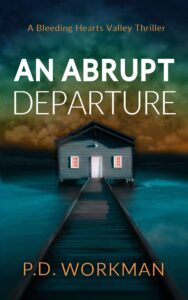
Bleeding Hearts Valley looks like the kind of Midwestern community where nothing truly terrible should happen. Its pleasant streets and respectable facades, however, conceal troubled histories and secrets that have been left undisturbed for too long.
Graham Hall is an outsider to the usual crime-solving professions. He owns a junk removal business, has a questionable past of his own, and notices the objects and inconsistencies other people dismiss.
Begin with An Abrupt Departure, then continue with Strike Bag, where another seemingly ordinary job draws Graham into danger.
Read this series if you like psychological thrillers, flawed amateur investigators, and small communities where appearances cannot be trusted.
Virtually Harmless by P.D. Workman

In Virtually Harmless, the discovery of an abandoned infant in the Sweetgrass Hills leads to an investigation shaped by forensic art, DNA, and modern technology.
The setting creates an immediate contrast. The landscape feels remote and timeless, while the investigators’ tools are distinctly contemporary. Distance does not erase a person’s connections; it makes those connections harder to trace.
Read this if you enjoy forensic mysteries, high-tech investigation, and crimes uncovered in wild, isolated places.
The Cody Hoyt novels by C.J. Box
Cody Hoyt is a troubled lawman whose investigations take him through the dangerous spaces of the Mountain West.
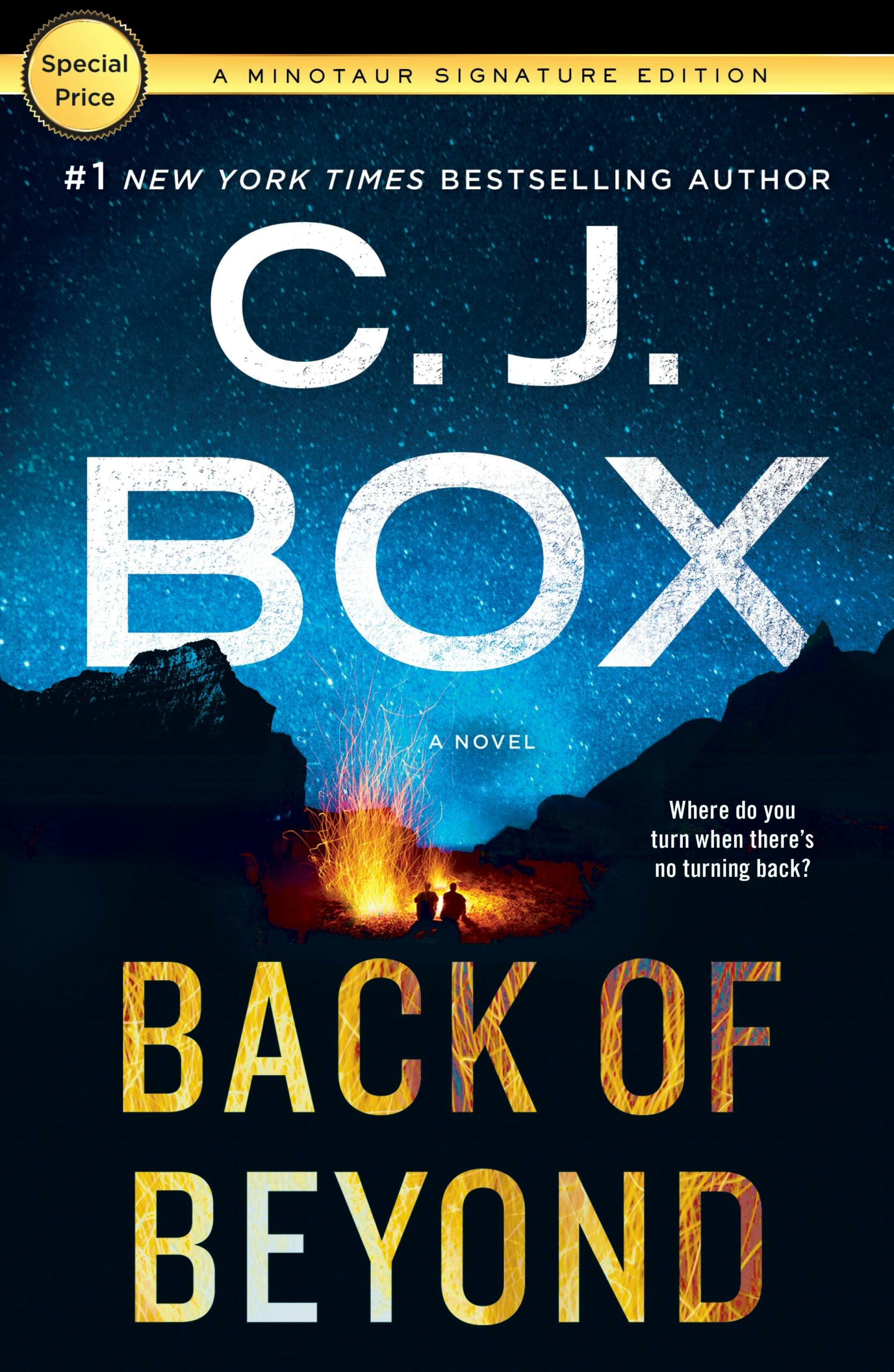
In Back of Beyond, a death in a remote mountain cabin sends Cody toward Yellowstone and a wilderness expedition carrying secrets of its own. The Highway moves the danger to remote Montana roads, where isolation gives a predator room to operate.
Cody’s personal damage is never separate from the cases. His flaws sharpen the tension and complicate every choice he makes.
Read these books if you like wilderness thrillers, deeply flawed investigators, and landscapes that become active parts of the danger.
The Cork O’Connor series by William Kent Krueger
Cork O’Connor’s cases are rooted in the north woods of Minnesota. The series draws on small-town relationships, family history, cultural tensions, and the practical realities of living close to the wilderness.
The lakes and forests offer beauty, livelihood, memory, and danger. Because Cork is deeply connected to the region, every investigation carries personal and community consequences.
Read this series if you enjoy long-running character arcs, atmospheric Minnesota settings, and mysteries in which place and identity are inseparable.
The Longmire mysteries by Craig Johnson
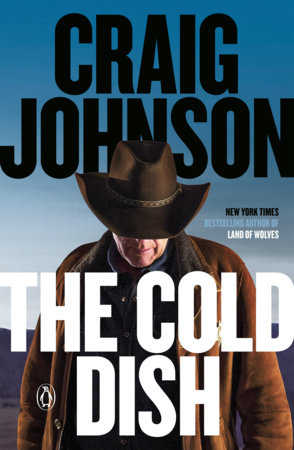
Sheriff Walt Longmire serves fictional Absaroka County in north central Wyoming, where a small population is spread across an enormous landscape.
The series combines police investigation with dry humour, friendship, local history, and the pressures of distance. Walt is a professional lawman, but the books retain the intimate feel of small-town mysteries: victims and suspects are rarely just names in a file.
Read this series if you like Western settings, character-driven investigations, and a lawman whose community ties complicate the job.
Why these regions work so well for mysteries
The Midwest and Mountain West are not interchangeable, but their mystery fiction often shares several useful tensions.
Everyone knows everyone—until they do not
Small communities create the impression that no one can keep a secret. In practice, familiarity can make people less likely to question an accepted story. The newcomer, outsider, or damaged investigator may be the one person willing to look again.
Distance changes the stakes
When help is far away, a routine decision can become dangerous. A blocked road, bad weather, failed vehicle, or missing phone signal matters more. Investigators must work with the people and resources already at hand.
The landscape remembers
Forests, hills, lakes, highways, and abandoned properties can preserve evidence—or swallow it. The land may also hold older histories that explain why a present-day crime matters so much.
Respectability can be camouflage
The tidy suburb and the picturesque small town can both create a reassuring public image. Mystery fiction turns that reassurance inside out, asking what the community has agreed not to see.
Where to start
Choose An Abrupt Departure for a Midwestern psychological thriller with an unconventional amateur sleuth.
Choose Virtually Harmless for a forensic mystery set against the Sweetgrass Hills.
Choose Back of Beyond for danger in Yellowstone country and a damaged investigator under pressure.
Choose the Cork O’Connor series for Minnesota atmosphere and a long-running community story.
Choose the Longmire mysteries for Wyoming crime fiction with a Western voice.
Frequently asked questions
What makes a mystery regional?
A regional mystery uses more than a place name. Its landscape, weather, local industries, history, and community relationships influence both the crime and the way it can be investigated.
Are all Mountain West mysteries wilderness thrillers?
No. Some focus on backcountry danger, while others centre on towns, highways, reservations, ranching communities, or law enforcement across large rural jurisdictions.
Which book is best for readers who prefer amateur sleuths?
Start with An Abrupt Departure. Graham Hall is a junk removal worker rather than a professional investigator, and his everyday work gives him an unusual route into the mystery.
What is the difference between a Midwestern mystery and a Mountain West mystery?
Midwestern mysteries often draw tension from close communities, long local memories, changing seasons, farms, forests, lakes, and towns where private lives overlap. Mountain West mysteries more often emphasize vast distances, high plains, mountain roads, wilderness, and the practical difficulty of getting help quickly. Many books combine elements of both.
Which of these mysteries has the strongest wilderness setting?
Try Back of Beyond for a journey into Yellowstone country, or the Cork O’Connor mysteries for cases rooted in Minnesota’s north woods and Boundary Waters region.
Which series should I choose for a traditional law-enforcement investigator?
The Longmire mysteries follow Wyoming sheriff Walt Longmire. The Cody Hoyt novels also centre on a lawman, but Cody’s personal troubles and volatile choices give the books a darker edge.
Can I start the Cork O’Connor or Longmire series anywhere?
Individual cases generally have their own resolutions, but both series develop relationships and personal histories over time. Start with Iron Lake for Cork O’Connor or The Cold Dish for Walt Longmire if you want to follow those arcs from the beginning.
Which recommendation uses modern forensic technology?
Virtually Harmless combines an isolated landscape with forensic art, DNA, and high-tech investigation.
Are these all small-town mysteries?
Not exactly. Small communities matter in several of the books, but some stories move onto remote highways or deep into the wilderness. What connects them is the way distance, landscape, and regional relationships shape the investigation.