



A Detective Who Feels Human
Why Zachary Goldman works for readers who want a private investigator with instincts, scars, and depth.

Sometimes I am in the mood for a mystery built around pure plot machinery.
But more often than not, the crime fiction that really stays with me is the kind where the investigator feels like a real person before they ever feel like a puzzle-solving device. I want the detective who notices things because of who they are. I want the case to matter because of what it costs them. I want the investigation to press on old bruises, loyalties, blind spots, and stubbornness instead of floating above the story untouched.
That is what character-driven detective fiction does so well.
What makes a detective feel character-driven
It is not just that the detective has a tragic backstory or a few interesting habits. It is that the way they move through the investigation feels personal.
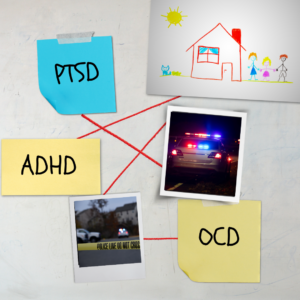
The clues matter, yes. The case matters, yes. But the detective’s mind matters too. Their instincts. Their relationships. The things they cannot let go. The things they would very much like to ignore but cannot.
When that is done well, the mystery gets richer. Every interview means more. Every wrong turn stings a little more. Every reversal hits harder because it is not just changing the plot. It is changing what the detective thought they understood about the people in front of them.
Why readers come back for these detectives
Plot can hook you fast. Character is what keeps you coming back.
Readers who love character-driven detectives are usually not looking only for a clever reveal. They are looking for a lead they want to spend time with. Someone observant and human. Someone who makes mistakes. Someone whose strengths come with edges.
That is especially true in long-running series. If the detective feels flat, twenty books is a lot. If the detective feels alive, readers will follow them almost anywhere.
Why private investigators are so good for this
I have always loved the intimacy of private investigator fiction. A PI does not have the same institutional distance a police procedural can have. The cases tend to be more personal. The clients are often messier. The investigator gets pulled right into family pressure, private fears, and the emotional fallout around the crime. That makes the detective feel closer to the people involved and, by extension, closer to the reader.
The case is not happening behind a desk. It is happening in living rooms, parking lots, kitchens, scenic pullouts, phone calls, and awkward conversations where nobody is saying quite enough. That is my favorite kind of pressure.
Zachary Goldman is exactly this kind of detective
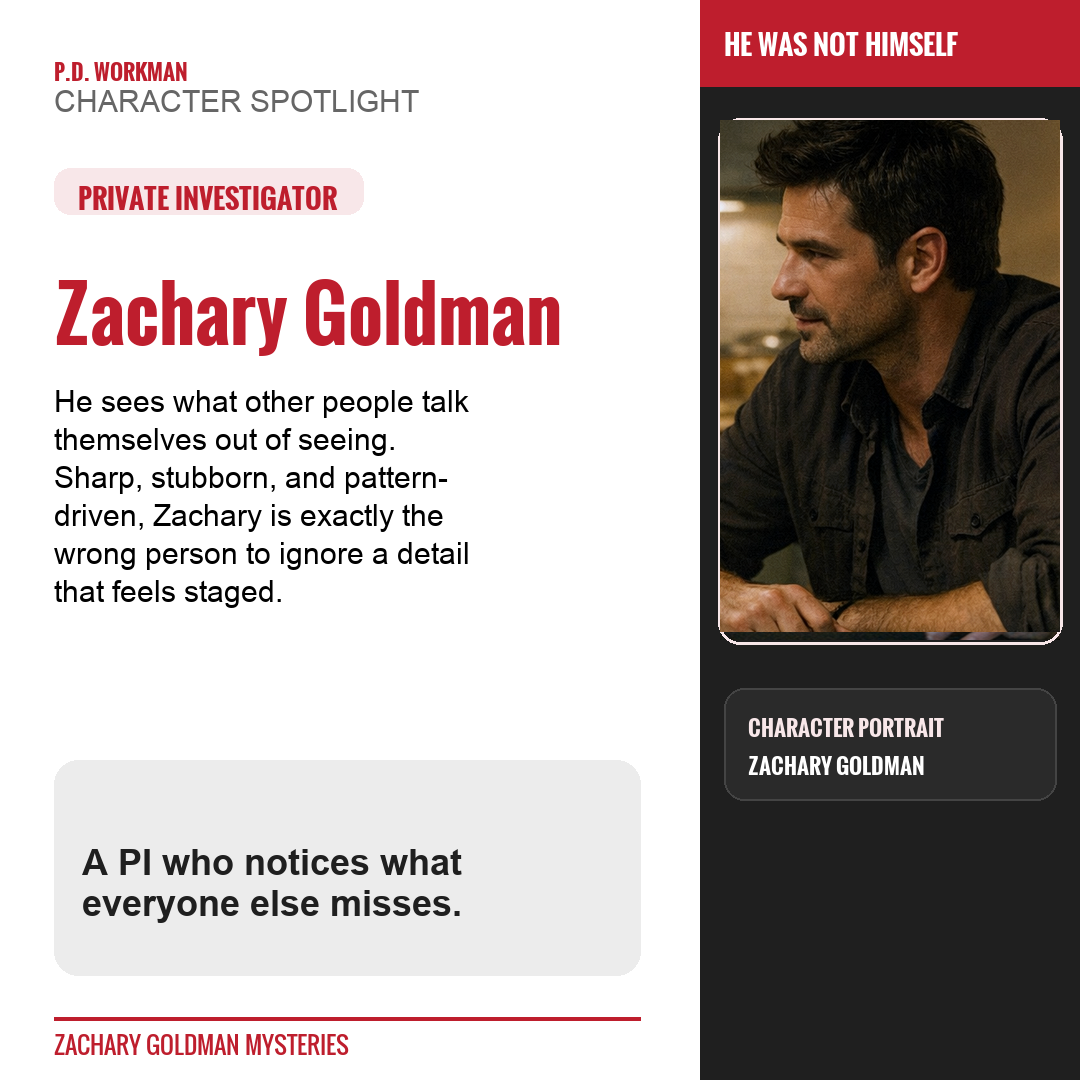
If you are looking for fresh crime fiction with a character-driven detective at the center, Zachary Goldman is a very good place to start. Zachary is not polished. He is not effortlessly in control. He is observant, stubborn, vulnerable, and very bad at walking away once he is hooked.
What I especially love about writing him is that his mind does not move in a bland, procedural rhythm. He catches patterns. He notices pressure. He listens for the detail that does not sit right.
That makes him a strong fit for mysteries built on false appearances and shifting loyalties, because he is exactly the kind of investigator who will keep worrying at the polished version until it cracks. That is a huge part of what drives He Was Not Himself.
A fresh entry point if that is what you want
In He Was Not Himself, Zachary takes what should be a straightforward background-check case for a worried father.
It is not straightforward for long. The setup gives him exactly the kind of investigation that works best for a character like him: a case built on doubt, instinct, facades, and the emotional mess people create around the truth.
If you like detectives who are not just solving for plot but reading pressure, relationships, and the part of the story that nobody wants looked at too closely, this book was very much written for you.
If you miss this kind of crime fiction, try these reading paths

If you want the freshest Zachary Goldman entry point, start with He Was Not Himself.
If you want to go all the way back to the beginning, start with She Wore Mourning. If you want a free first taste, try Annie was the girl he couldn’t save, a website-exclusive behind-the-character story.
If you want more Zachary Goldman reading while you are here, take a look at A Murder, a Silent Child, and a Private Investigator Who Understands Trauma and If You Love PI Mysteries, He Broke the Silence Is for You.
There is a lot of crime fiction out there right now. Some of it is slick. Some of it is high-concept. Some of it is built to move fast and vanish. But if what you are really missing is a detective who feels human and a case that gets under his skin as much as it gets under yours, that is the lane Zachary lives in.
Keep Exploring Zachary Goldman Mysteries

Private Investigator Hub
Start with the Zachary Goldman mysteries

Trauma and Truth
A silent witness, a murder, and a PI who understands trauma
Scars Written on the Skin
Zachary Goldman’s trauma-informed private investigator journey

Too Perfect to Trust
When the suspect looks flawless, Zachary starts digging
FAQ
What is character-driven detective fiction?
It is mystery fiction where the detective’s personality, instincts, wounds, and relationships shape the investigation as much as the clues do.
Is Zachary Goldman a private investigator or a police detective?
Zachary Goldman is a private investigator, which lets the cases get more intimate, more personal, and more emotionally tangled than a standard procedural.
Is He Was Not Himself a good starting point?
Yes. It is a strong jump-in point for new readers because the case hook is immediate and the book works as a standalone.
Are the Zachary Goldman mysteries more emotional or procedural?
They lean toward the emotional and character-driven side of mystery, while still giving readers a satisfying investigation and strong forward momentum.
Where can I read more about Zachary Goldman?
The best place to start is the Zachary Goldman mysteries hub, along with related posts like A Murder, a Silent Child, and a Private Investigator Who Understands Trauma.