



A police procedural mystery needs evidence. The evidence does not need to be flashy. In fact, the best clues often are small or mundane. It may be a detail that does not match a witness’s story, a gap in a timeline, a record that was overlooked, or a small fact that takes on new meaning after one more interview.
What makes a police procedural satisfying is watching the detective turn those separate pieces into a case that can stand up.
In the Parks Pat Mysteries, Detective Margie Patenaude follows the facts. She also understands that every fact belongs to somebody’s real life.
Evidence is more than a lab report

Television has taught us to expect a mystery to be solved by one dramatic test result. A police procedural can include forensics, of course, but a real case is usually built from more than that.
A detective looks at access, opportunity, timing, and motive. She talks to the people who were there. She asks the same question in different ways. She checks whether a story fits the location and whether the location fits the story. She keeps track of what someone says, but she also pays attention to what they leave out.
That is the quiet pleasure of a procedural. The answer grows from patient, sometime plodding work. A piece of evidence is not magic. It is one part of a larger picture.
The setting gives evidence a meaning
A clue is never separate from the setting. A crowded athletic park creates different questions from a quiet stretch of woods. A river flat with layers of history creates different questions from a garden, a reservoir, or an open field.
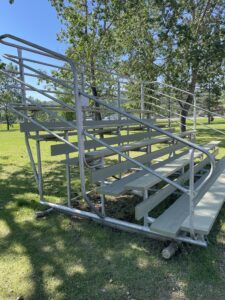
In Silence on the Turf, the busy setting at Shouldice Park means many people are close to the case. That does not make the truth easy to find. A crowd can produce rumours, assumptions, and a lot of partial memories. Margie needs to sort out what people know from what they think they know.
Ghosts in the Ground puts the investigation in a place shaped by the river, industry, and community memory. The past matters, but Margie still has to separate documented fact from the stories people carry with them.
In Bones of the Elbow, the setting calls for care. Human remains, a public park with a fragile ecosystem, and strong feelings about how the land should be used make every decision matter. Evidence must be preserved and protected.
A detective has to earn the answer

Readers of police procedural mysteries do not only want to know who committed the crime. They want to see how the detective figures it out. Margie makes connections because she has done the work, listening closely, checking the details, and persisting even when the first theory falls apart.
The same is true in earlier Parks Pat cases. Grounded in the Wind, Reservoir of Secrets, and Peril in the Blooms each give Margie a different piece of Calgary and a different problem to untangle. The cases are self-contained, but they share the same promise: the solution has to be earned.
Police procedurals with heart
Evidence matters. So do the people around a case. A death changes the lives of family, friends, coworkers, and neighbours. Witnesses may be frightened, angry, stubborn, or grieving. Suspects have their own reasons for holding back. A good detective notices those things without letting sympathy replace proof.
Margie is good at that balance. She is a Calgary Police Service homicide detective, but she is also a mother and a Métis woman with a life beyond the shift. She understands that a case is not merely a file to close. Still, she has to do the job carefully and fairly, especially when emotions are running high.
That is where police procedurals find their heart. The procedure gives the investigation its shape; the people give it weight.

Follow the evidence with Parks Pat
If you enjoy police procedurals with strong setting, the Parks Pat series may be a good fit. Calgary’s parks, pathways, water, and neighbourhoods are not just background. They are part of how Margie sees each case.
You can begin with Out with the Sunset to follow Margie from the start, or jump into one of the new park mysteries: Silence on the Turf, Ghosts in the Ground, or Bones of the Elbow. Each is a stand alone mystery.
For more police procedural reading ideas, visit the Police Procedural Mysteries hub.
Frequently asked questions
What role does evidence play in a police procedural mystery?
Evidence gives the investigation its shape. Detectives compare witness accounts, timing, records, and physical clues until the facts support a clear conclusion.
Are the Parks Pat Mysteries about more than the investigation?
Yes. The books follow the evidence, but they also consider the family, community, and place around each case. Margie is a detective, a mother, and a Métis woman working in Calgary.