


Three Steps and a Pivot
The Making of a Detective
Read He Didn’t Save Her, a Zachary Goldman Prequel by signing up for updates.
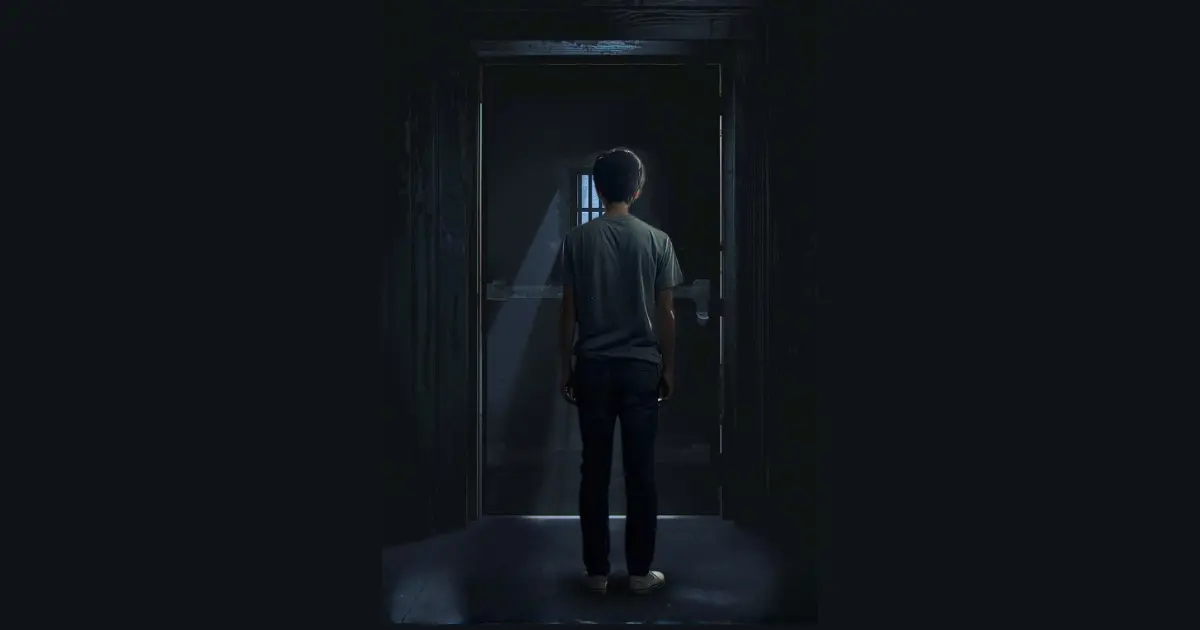
To the uninitiated, the Bonnie Brown detention block is a site of punitive isolation—a concrete finality for the “incorrigible.” However, for Zachary Goldman, it is also a sanctuary. Vulnerable to older and more violent kids, he is hypervigilant and takes some measure of comfort to the safety and sensory deprivation of the windowless room.
Zachary’s arrival in this enforced quiet zone is not by choice, but rather the result of a predictable neurological collapse.
- Strike one: Talking back to a teacher.
- Strike two: A classroom scuffle.
- Strike three: The physiological crash of med rebound.
In this isolation, we begin to see the boy behind the labels of “incorrigible” and “troubled,” a child overwhelmed by his traumatic history and the system he is trapped within.
Three Steps and a Pivot

Locked in that tiny cell, Zachary keeps himself together by pacing. There’s not much space, but that “three steps and a pivot” anchors him and calms the skin-crawling sensation of bugs under his skin. Moving is the only thing that keeps the panic from swallowing him, so he paces. While he’s moving, he runs the numbers in his head—how bad is the empty, cold quiet of the cell, and how much worse are the dangers waiting in the open units of the facility?
“No homework. No tutoring, no studying. No getting woken up in the night. No touching. No hitting. No yelling.”
There is a heavy price for this peace—he is unable to pursue his photography, there is no television, no human warmth—but for Zachary, the trade-off is a matter of survival. The cell is the only place where the world can’t reach him.
Except for the guards.
Witness to the Unspeakable

Zachary is a watcher. Through a narrow slit of glass in his cell door, he sees something that never should have happened. The staff shrugs, makes excuses, and pretends everything was normal, but Zachary knows better.
He can’t tell anyone.
Speaking up would put him in danger, and for what? It won’t change the past. So he swallows it and carries the memory alone. It’s not cowardice. It’s survival. A small mark on the glass is a reminder and a warning. A physical record burned into his brain.
Strategic Compliance

Zachary survives by learning to read those in authority over him, but learning how they think. Physically, he is vulnerable, he cannot protect himself. Answering a well-meaning question can leave him exposed if someone else is watching and listening.
When things go sideways, Zachary doesn’t fight back. He knows he can’t. He shows compliance, submission, hoping to avoid the inevitable punishment, but not daring to believe it will work.
The Scars that Shape a Hero

Bonnie Brown taught Zachary to watch to survive. He learned to read the tiny tells: to recognize the lies, the anxiety, the rehearsed story. Those little things kept him safe while institutionalized and later became the tools of his trade.
There’s also that one choice he never stopped paying for. He didn’t act once when it mattered, and the memory of that quiet failure remains. Guilt is turned into purpose. He spends a lifetime trying to protect, correct injustices, and make other people whole.
Zachary Goldman PI’s investigation style is dogged and patient. He notices the details nobody else thinks to look at, asks the uncomfortable questions, reads people, and keeps going long after others have given up. It is part craft, part habit, and part penance. He chases justice because he must and because standing down again isn’t an option.
Get He Didn’t Save Her, A Zachary Goldman Prequel Free with your subscription to my newsletter.
He Didn’t Save Her is the perfect prequel to He Broke the Silence, They Stole Her Story, and He Was Not Himself, available for order now!
FAQs
Q: What do I get when I subscribe?
A: A free copy of the Zachary prequel He Didn’t Save Her, release updates, and occasional club-only extras.
Q: Will I be charged?
A: No — the prequel is free with subscription. You can unsubscribe anytime.